The corrosion rate in a corrosion system is influenced by many variables, including pH, temperature, electrochemical potential, electrolyte composition, and the corrosion control method applied. Because these variables interact with each other, evaluating corrosion protection methods can become complex and time-consuming.
Corrosion is fundamentally an electrochemical process. When analyzing a corrosion system, electrical principles can help explain how corrosion reactions occur and how they can be controlled. According to the concept of electrical resistance, higher electrical resistance results in lower current flow. Lower current flow typically corresponds to a lower corrosion rate.
If a corrosion system is treated as an electrochemical cell, researchers can measure the electrical response of the system under a controlled potential. By measuring the current response to that applied potential, it becomes possible to determine the electrical resistance of the corrosion system and gain insight into how corrosion reactions are progressing.
The overall electrical resistance of a corrosion system can include several elements such as resistors, capacitors, and inductors. If a proper model is used to analyze the system resistance, researchers can distinguish which component dominates the corrosion behavior and potentially identify the root cause of system failure.
Why Electrochemical Impedance Spectroscopy Helps Analyze a Corrosion System
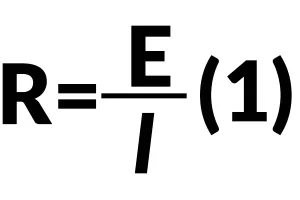
Ohm’s Law describes the relationship between voltage, current, and resistance in simple circuits. However, it does not account for frequency changes or phase shifts that occur when alternating current is applied. Because real corrosion systems often involve capacitive and inductive effects, a more advanced method is required.
Electrochemical Impedance Spectroscopy, commonly referred to as EIS, applies an alternating current signal across a wide range of frequencies. Instead of measuring only resistance, this technique measures impedance, which provides more complete information about the electrochemical behavior within a corrosion system.
Need Expert Guidance for Your Corrosion System?
Every corrosion system behaves differently depending on the environment, metal type, and exposure conditions. ZERUST® corrosion engineers can help evaluate your process and recommend practical corrosion prevention strategies.
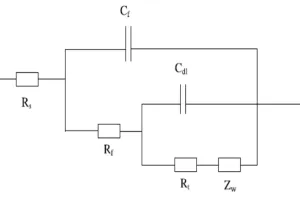
Researchers often represent a corrosion system using an equivalent electrical circuit model. This approach helps translate electrochemical behavior into electrical components that can be analyzed and interpreted.
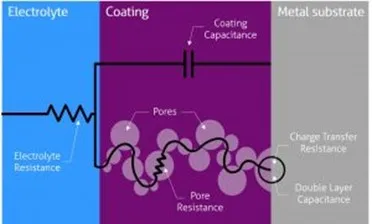
A common equivalent circuit model for a coated metal exposed to corrosive conditions is shown in Figure 1 and Figure 2.
Each of these elements provides important insight into how the corrosion system behaves.
Figure 1: Equivalent circuit model for metal with coating.
Figure 2: Equivalent circuit model for metal with coating. Coating resistance is described as pore resistance here.
Solution Resistance in the Corrosion System
Solution resistance, also called electrolyte resistance and represented as Rs, is a key factor in the impedance of an electrochemical corrosion system.
The resistance of the electrolyte depends on several variables, including ion type, ion concentration, temperature, and the geometry of the electrode surface. For example, deionized water has a much higher resistance than a salt solution because it contains fewer conductive ions.
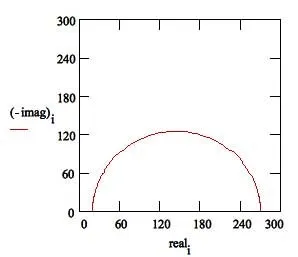
Solution resistance is often determined using a Nyquist plot. Specifically, it is read from the real axis value at the high frequency intercept, as shown in Figure 3.
Figure 3: Nyquist Plot.
Charge Transfer Resistance and Metal Dissolution
Charge transfer resistance, represented as Rt, is associated with the corrosion reaction that occurs when a metal comes into contact with an electrolyte.
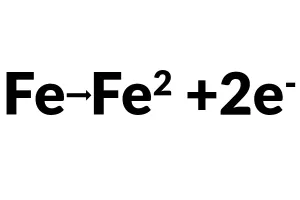
When this happens, oxidation occurs at the metal surface. Metal atoms lose electrons and become metal ions that enter the solution. This transfer of charge is part of the electrochemical reaction that drives corrosion within the corrosion system.
Charge transfer resistance is strongly influenced by several factors, including:
Reaction kinetics
Temperature
Concentration of reactants and reaction products
Electrochemical potential
In some experiments, researchers stir the solution to reduce concentration gradients between the metal surface and the bulk electrolyte. This helps them study the kinetics of the charge transfer reaction more accurately.
Diffusion Effects and Warburg Impedance
Warburg impedance, represented as Zw, describes the effect of mass transfer limitations within a corrosion system.
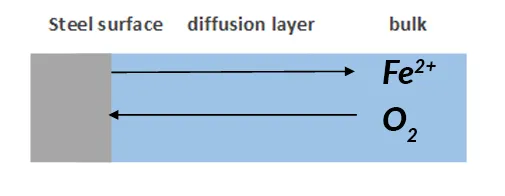
A concentration gradient typically forms between the bulk solution and the metal surface. Metal ions must diffuse away from the surface, while oxidizing species must move toward the surface to sustain corrosion reactions.
Warburg impedance reflects how easily these species can move through the electrolyte. The effect is illustrated in Figure 4.
The magnitude of Warburg impedance also depends on the frequency of the applied potential signal. At low frequencies, reactants must travel further during each measurement cycle, which increases diffusion resistance. At higher frequencies, the diffusion distance is shorter and the measured impedance decreases.
Figure 4 diffusion layer caused by the reactant concentration gradient between bulk and metal surface.
Improve Corrosion Protection Performance
If corrosion testing reveals weaknesses in your corrosion system, ZERUST® can help. Our team works with manufacturers worldwide to develop corrosion prevention solutions for storage, transport, and processing environments.
Coating capacitance, represented as Cf, is commonly used to evaluate the protective performance of organic coatings or hydrophobic layers applied to metal surfaces.
Capacitance depends on several factors:
Surface area
Dielectric constant of the coating material
Distance between conductive surfaces, which relates to coating thickness
At room temperature, deionized water has a dielectric constant of about 80, while most organic coatings have dielectric constants below 10. When coating capacitance increases, it often indicates that the coating has absorbed water or developed defects.
One common defect is the formation of pores in the coating. These pores provide additional pathways for reactants and electrons, which can accelerate corrosion within the corrosion system.
Double Layer Capacitance at the Metal Interface
Double-layer capacitance, represented as Cdl, forms at the interface between the metal surface and the electrolyte.
At this interface, water molecules and ions arrange themselves into a structured layer. The charged metal surface is separated from charged ions in the solution by a very thin insulating region that behaves like a capacitor.
The properties of this double layer depend on several factors, including:
Open circuit electrode potential
Temperature
Ionic concentration
Type of ions present
Oxide layers on the metal surface
Electrode roughness and impurities
Gases such as oxygen and carbon dioxide can also influence the structure of the double layer and affect the measured capacitance.
The thickness of the double layer is typically in the range of angstroms. In real electrochemical cells, the double layer rarely behaves as a perfect capacitor. As a result, it is often modeled using empirical constants when analyzing a corrosion system.
Want Help Evaluating Your Corrosion System?
Talk with ZERUST® corrosion specialists to review your environment, materials, and protection methods. We can help you interpret test results and select a practical corrosion control approach for storage, shipping, and long-term protection.
BonnelA, & DabosiF. (1983). Corrosion Study of a Carbon Steel in Neutral Chloride Solutions by Impedance Techniques. Journal of the Electrochemical Society, 753-763.
HongT, SunY.H, & JepsonW.P. (2002). Study on Corrosion Inhibitor in Larger Pipeline under Multiphase Flow using EIS. Corrosion Science, 101-112.
ZhengYougui. (2015). Electrochemical Mechanism and Model of H₂S Corrosion of Carbon Steel. Athens: Ohio University.
Lujie Ye
Lujie “Lulu” Ye serves as a Formulation Engineer and R&D Project Manager at ZERUST®, where she applies six years of expert industry knowledge to support product development and innovation. Lulu plays a central role in formulating new corrosion prevention technologies and managing research projects that address the evolving needs of global manufacturers. With a strong technical background and a commitment to advancing sustainable solutions, she contributes to ZERUST®’s mission of delivering reliable, high-performance corrosion protection across industries.
ICT®510-C VCI Film provides cost-effective and versatile protection against rust and corrosion damage for metal assets in shipping and storage. Additionally, it’s available in ferrous, non-ferrous, and multimetal formulations, as well as various-sized rolls, sheets, tubing, and bags.
ICT®510-OPS VCI Shrink Film is an 8-mil, high-strength shrink film integrated with ZERUST® Vapor Corrosion Inhibitor (VCI) technology and UV stabilizers, designed specifically for the long-term outdoor preservation of large assets.
Axxanol™ Spray-G is a sprayable rust preventative grease that provides the protection of a grease in the convenience of a sprayable form. It’s designed to protect metal parts, equipment, and assemblies during long-term indoor and outdoor storage and challenging overseas shipping applications where a removable coating is essential.
Axxanol™ Z-Maxx Anti-Corrosion Grease Series consists of two products, Axxanol™ Z-Maxx and Z-Maxx LV. Z-Maxx is a thick NLGI 2 grease and is also offered as a lower viscosity (LV) NLGI 0 grease that is designed for spreadability and light lubrication properties.
Vapor Capsules are portable VCI emitter diffusers containing proven ZERUST® Vapor Corrosion Inhibitors (VCI). They protect metals in hard-to-reach areas of control panels, electrical cabinets, or other enclosed spaces from corrosion, even when they are in operation. Additionally, use these VCI emitter diffusers as a supplement to other ZERUST® VCI packaging products for added protection.
AxxaVis™ HST-10 powder additive is an effective hydrostatic testing corrosion inhibitor that treats water used to test pressure vessels and voids. It reduces hardness and deactivates ionic contaminants like chlorides found in municipal water sources, preventing rust and hard water deposits on metals.
ICT®510-ATS Anti-Static VCI Film provides cost-effective and versatile protection for electronics and electrical components against electrostatic discharge and corrosion damage in shipping, storage, and work-in-progress.
Axxanol™ 707C VCI oil additive is a vapor-phase-only corrosion inhibitor concentrate specially designed for use with lubricating oils. Furthermore, it provides corrosion protection of metal surfaces within the void spaces of closed systems, such as internal combustion engines, transmissions, gearboxes, hydraulic systems, or other sealed, lubricated systems.
To provide the best experiences, we use technologies like cookies to store and/or access device information. Consenting to these technologies will allow us to process data such as browsing behavior or unique IDs on this site. Not consenting or withdrawing consent, may adversely affect certain features and functions.
Functional
Always active
The technical storage or access is strictly necessary for the legitimate purpose of enabling the use of a specific service explicitly requested by the subscriber or user, or for the sole purpose of carrying out the transmission of a communication over an electronic communications network.
Preferences
The technical storage or access is necessary for the legitimate purpose of storing preferences that are not requested by the subscriber or user.
Statistics
The technical storage or access that is used exclusively for statistical purposes.The technical storage or access that is used exclusively for anonymous statistical purposes. Without a subpoena, voluntary compliance on the part of your Internet Service Provider, or additional records from a third party, information stored or retrieved for this purpose alone cannot usually be used to identify you.
Marketing
The technical storage or access is required to create user profiles to send advertising, or to track the user on a website or across several websites for similar marketing purposes.
To provide the best experiences, we use technologies like cookies to store and/or access device information. Consenting to these technologies will allow us to process data such as browsing behavior or unique IDs on this site. Not consenting or withdrawing consent, may adversely affect certain features and functions.
Functional
Always active
The technical storage or access is strictly necessary for the legitimate purpose of enabling the use of a specific service explicitly requested by the subscriber or user, or for the sole purpose of carrying out the transmission of a communication over an electronic communications network.
Preferences
The technical storage or access is necessary for the legitimate purpose of storing preferences that are not requested by the subscriber or user.
Statistics
The technical storage or access that is used exclusively for statistical purposes.The technical storage or access that is used exclusively for anonymous statistical purposes. Without a subpoena, voluntary compliance on the part of your Internet Service Provider, or additional records from a third party, information stored or retrieved for this purpose alone cannot usually be used to identify you.
Marketing
The technical storage or access is required to create user profiles to send advertising, or to track the user on a website or across several websites for similar marketing purposes.